

What does moringa do? In short, moringa is one of the most nutrient-dense plants studied, and it works on several fronts at once: it delivers a broad spread of vitamins and minerals, supplies polyphenol antioxidants that help counter oxidative stress, and has been studied for its effect on blood sugar. It's often called a "superfood" — but the marketing frequently outruns the evidence. This UK guide breaks down what moringa actually does in the body, what the research genuinely supports, and how to take it sensibly.
What is moringa?
Moringa (Moringa oleifera) is a fast-growing tree native to South Asia, sometimes called the "drumstick tree" or "miracle tree." The leaves are the part most used in supplements — dried and either powdered or packed into capsules. Traditional medicine across Africa and Asia has used moringa for generations, and modern research has increasingly turned its attention to the leaf's nutritional and bioactive properties.
What does moringa do nutritionally?
This is moringa's headline strength. Dried moringa leaf is remarkably rich in protein, iron, calcium, potassium and vitamins A and C, and analyses have identified a wide range of additional trace elements (elemental composition study). Dried leaf protein content typically falls in the region of 19–27 g per 100 g, which is high for a leafy plant (nutritional composition review). Because it packs this nutrition into very few calories, moringa is a useful way to top up your diet — especially helpful if you're eating lighter or following a plant-based routine.
What does moringa do for blood sugar?
This is where moringa's human research is strongest. In a randomised placebo-controlled trial, adults with prediabetes taking moringa saw favourable changes in fasting glucose and HbA1c compared with placebo (prediabetes RCT). Small trials in people with type 2 diabetes have similarly reported improvements in blood glucose and lipid markers (type 2 diabetes RCT, leaf-capsule RCT). A systematic review concluded moringa shows genuine hypoglycaemic activity, while noting the human trials are still relatively few (systematic review).
What does moringa do for inflammation and antioxidants?
Moringa leaf is high in polyphenols and flavonoids — plant compounds that act as antioxidants, helping to neutralise the free radicals linked to oxidative stress. Much of the antioxidant and anti-inflammatory work so far is laboratory and animal based, so it's fair to say the mechanism is well established while the size of the real-world benefit in humans is still being mapped. Even so, the antioxidant density is a genuine part of what makes moringa nutritionally valuable.
What does moringa do for energy?
Moringa isn't a stimulant — it contains no caffeine. Any "energy" benefit is indirect: by supplying iron, B-vitamins and steadier nutrition, it supports the systems your body uses to produce and sustain energy, which can help reduce the mid-afternoon slump that comes with blood-sugar swings. If you're expecting a caffeine-style hit, moringa won't provide it — the effect is subtler and builds with consistent use.
What moringa does not do
Keeping expectations realistic matters. Moringa is not a proven weight-loss treatment — most fat-loss findings come from animal studies, not humans. It's not a cure for any disease, and it's not a replacement for a balanced diet or prescribed medication. It's a nutritious, well-tolerated supplement that supports good habits rather than replacing them. For a deeper look at the weight question specifically, see our guide on whether moringa helps you lose weight.
How to take moringa
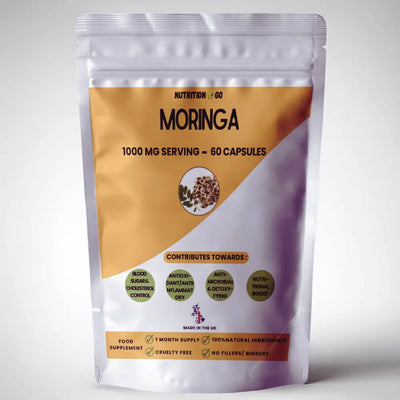
Moringa comes as loose powder, tea and capsules. Moringa leaf capsules are the most convenient way to get a consistent daily dose without measuring powder or dealing with its earthy taste. Research generally uses doses in the region of 1.5–3 g of leaf per day. If you're new to it, start low and build up — a minority of people get mild digestive upset at first, which usually settles.
- Be consistent. Moringa's benefits build over weeks of daily use, not overnight.
- Take with food if it unsettles your stomach on an empty stomach.
- Choose leaf, not seed, for the nutritional benefits described here.
How to take it safely
If you've read the cautions above and moringa is right for you, our UK-made leaf capsules make daily dosing simple:
So, what does moringa do — the verdict
Moringa is a genuinely nutrient-dense leaf that supports your diet on several fronts: it tops up vitamins and minerals, delivers antioxidant polyphenols, and has the most human research around blood sugar. It works best as a consistent daily addition to an already-healthy routine — not as a miracle cure. Used with realistic expectations, it's a sensible choice for most healthy adults.
Moringa is part of our wider energy and vitality range:

